Fill a Valid Roof Inspection Form
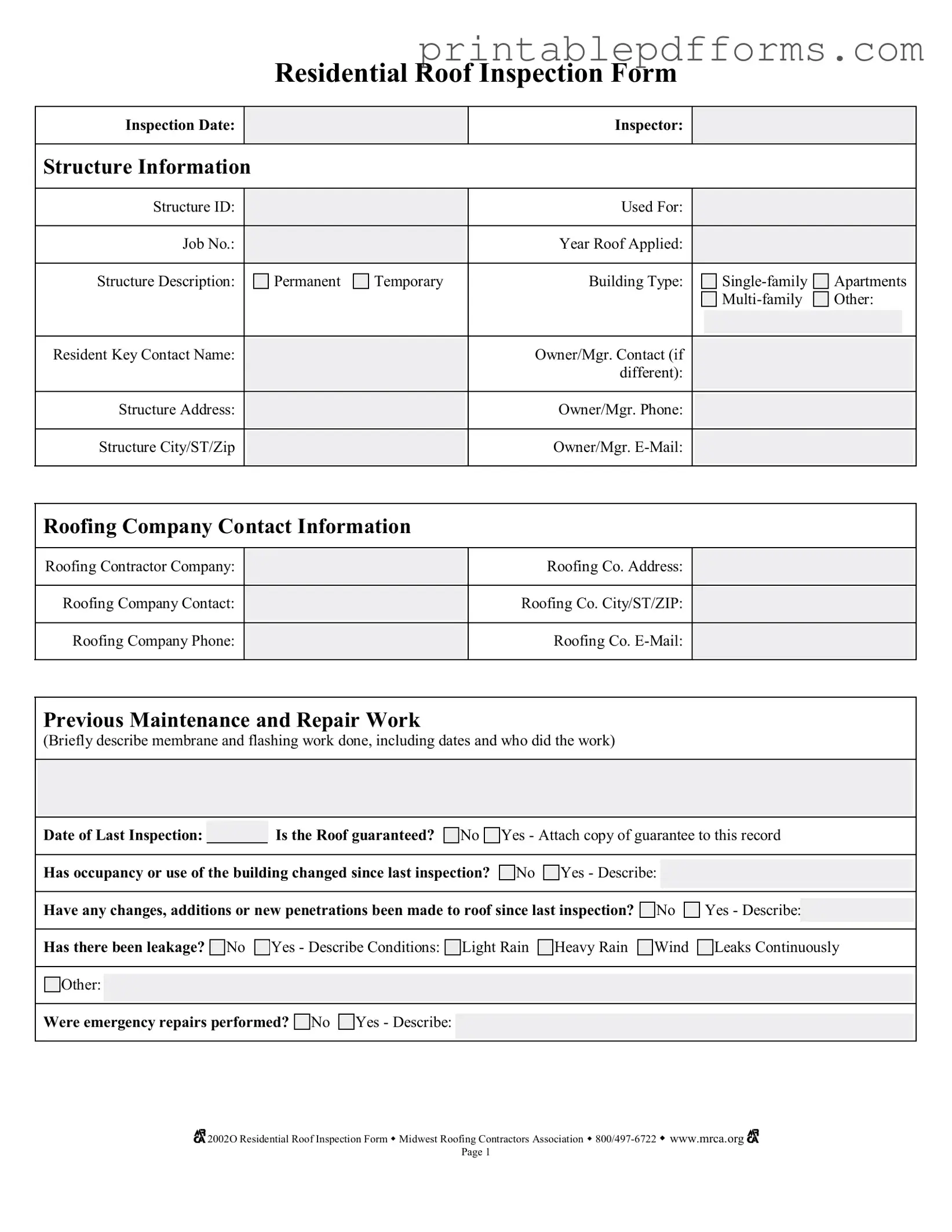
The Roof Inspection form is a crucial tool designed to assess the condition and integrity of residential roofing systems. It serves as a comprehensive record that captures essential details such as the inspection date, inspector's name, and structure information including the type of building and its address. The form also requires contact information for both the owner or manager and the roofing contractor, ensuring clear communication among all parties involved. Previous maintenance and repair work must be documented, along with the date of the last inspection, which helps establish a timeline for roof care. Important questions regarding changes in occupancy, modifications to the roof, and any history of leaks are included to provide a complete overview of the roof's status. The form employs a coding system to evaluate various conditions, ranging from good to poor, across multiple areas such as the roof deck, walls, and drainage systems. This structured approach allows inspectors to identify potential issues and recommend necessary actions, ensuring that the roof remains in optimal condition. Additionally, the inclusion of a photographic record section aids in visual documentation, further supporting the findings of the inspection. Overall, the Roof Inspection form is an indispensable resource for homeowners and professionals alike, facilitating proactive maintenance and enhancing the longevity of roofing systems.
Additional PDF Templates
1098s - A clear snapshot of your mortgage obligations is available here.
This document serves as a vital resource for horse owners, providing a comprehensive overview of the necessary steps involved in creating a Horse Bill of Sale that protects both parties in the transaction. For more details, refer to the complete guide on Horse Bill of Sale procedures.
Fedex Freight Truck - The Bill is a legally binding document that protects both the shipper and carrier in case of disputes.
Similar forms
Home Inspection Report: Similar to the Roof Inspection form, this document assesses the overall condition of a home, including structural integrity, safety issues, and maintenance needs. Both forms require detailed observations and notes on various components of the property.
Property Condition Assessment (PCA): This document evaluates a property's physical condition and identifies any potential liabilities. Like the Roof Inspection form, it provides a systematic approach to documenting issues and recommendations for repairs.
-
Ohio Unclaimed Form - By utilizing the Ohio Unclaimed Form, individuals can effectively begin the process of reclaiming lost assets. This essential tool, along with resources like All Ohio Forms, facilitates the recovery of funds that may otherwise remain unclaimed.
Roof Warranty Documentation: This document outlines the terms and conditions of a roof warranty. It is similar to the Roof Inspection form in that it may require information about previous inspections and maintenance work to validate coverage.
Maintenance Log: A maintenance log tracks all repairs and maintenance activities performed on a property. This document is akin to the Roof Inspection form, as both require detailed records of past work and conditions observed during inspections.
Insurance Claim Form: Used to report damages for insurance purposes, this form shares similarities with the Roof Inspection form in that it requires a detailed description of damage and previous conditions to support claims.
Building Code Compliance Report: This report ensures that a structure meets local building codes. It parallels the Roof Inspection form by documenting compliance and identifying areas needing immediate attention.
Environmental Assessment Report: This report evaluates environmental hazards in a building. It is similar to the Roof Inspection form in that both assess conditions that could impact safety and functionality.
Roof Maintenance Plan: A strategic document that outlines scheduled maintenance activities for a roof. Like the Roof Inspection form, it identifies areas needing attention and sets a timeline for necessary actions.
Document Example
Residential Roof Inspection Form
Inspection Date: |
|
Inspector: |
|
|
|
|
|
|
|
Structure Information
Structure ID: |
|
|
Used For: |
|
|
|
|
|
|
|
|
|
|
|
|
|
|
Job No.: |
|
|
Year Roof Applied: |
|
|
|
|
|
|
|
|
|
|
|
|
|
|
Structure Description: |
Permanent |
Temporary |
Building Type: |
|
Apartments |
|||
|
|
|
|
|
Other: |
|||
|
|
|
|
|
|
|
|
|
|
|
|
|
|
|
|
|
|
|
|
|
|
|
|
|
|
|
Resident Key Contact Name: |
|
|
Owner/Mgr. Contact (if |
|
|
|
|
|
|
|
|
|
|
|
|
||
|
|
|
different): |
|
|
|
|
|
|
|
|
|
|
|
|
|
|
|
|
|
|
|
|
|
|
|
Structure Address: |
|
|
Owner/Mgr. Phone: |
|
|
|
|
|
|
|
|
|
|
|
|
|
|
|
|
|
|
|
|
|
|
|
Structure City/ST/Zip |
|
|
Owner/Mgr. |
|
|
|
|
|
|
|
|
|
|
|
|
||
|
|
|
|
|
|
|
|
|
|
|
|
|
|
|
|
|
|
Roofing Company Contact Information
Roofing Contractor Company: |
|
Roofing Co. Address: |
|
|
|
|
|
|
|
Roofing Company Contact: |
|
Roofing Co. City/ST/ZIP: |
|
|
|
|
|
|
|
|
|
|
|
|
Roofing Company Phone: |
|
Roofing Co. |
|
|
|
|
|
||
|
|
|
|
|
|
|
|
|
|
Previous Maintenance and Repair Work
(Briefly describe membrane and flashing work done, including dates and who did the work)
Date of Last Inspection: |
|
Is the Roof guaranteed? |
No |
Yes - Attach copy of guarantee to this record |
||||||||
|
|
|
|
|
|
|
|
|
|
|||
|
|
|
|
|
|
|
||||||
Has occupancy or use of the building changed since last inspection? |
No |
Yes - Describe: |
|
|
|
|
||||||
|
|
|
|
|
|
|
|
|
||||
|
|
|
|
|
|
|
|
|
|
|
|
|
|
|
|
|
|||||||||
Have any changes, additions or new penetrations been made to roof since last inspection? |
No |
Yes - Describe: |
|
|
||||||||
|
|
|
|
|
|
|
|
|
|
|
|
|
Has there been leakage? No |
Yes - Describe Conditions: |
Light Rain |
Heavy Rain |
Wind |
Leaks Continuously |
|||||||
|
|
|
|
|
|
|
|
|
|
|
|
|
|
|
|
|
|
|
|
|
|
|
|
||
Other: |
|
|
|
|
|
|
|
|
|
|
|
|
|
|
|
|
|
|
|
|
|
|
|
|
|
|
|
|
|
|
|
|
|
|
|
|
|
|
Were emergency repairs performed? No |
Yes - Describe: |
|
|
|
|
|
|
|
|
|||
|
|
|
|
|
|
|
|
|||||
|
|
|
|
|
|
|
|
|
|
|
|
|
 2002O Residential Roof Inspection Form w Midwest Roofing Contractors Association w
Page 1

Residential Roof Inspection Form
Code |
|
|
|
Condition |
|
||||
|
|
|
|
G = Good, No Action |
|
||||
|
|
|
|
F = Fair, Monitor Periodically |
|
||||
|
|
|
|
P = Poor, Immediate Action |
|
||||
|
|
|
|
|
|
|
|
|
|
|
|
|
|
G |
F |
P |
Location |
Action Taken |
|
|
|
|
|
|
|
|
|
|
|
|
Interior |
|
|
|
|
|
|
||
|
|
|
|
|
|
|
|
|
|
|
Roof Deck |
|
|
|
|
|
|
||
|
|
|
|
|
|
|
|
|
|
A1 |
Corrosion |
|
|
|
|
|
|
||
|
|
|
|
|
|
|
|
|
|
A2 |
Spalling (chipping or crumbling) |
|
|
|
|
|
|
||
|
|
|
|
|
|
|
|
|
|
A3 |
Cracking |
|
|
|
|
|
|
||
|
|
|
|
|
|
||||
|
|
|
|
|
|
|
|
|
|
A4 |
Buckling |
|
|
|
|
|
|
||
|
|
|
|
|
|
||||
|
|
|
|
|
|
|
|
|
|
A5 |
Sagging |
|
|
|
|
|
|
||
|
|
|
|
|
|
||||
|
|
|
|
|
|
|
|
|
|
|
|
|
|
|
|
|
|
|
|
A6 |
Open Joints |
|
|
|
|
|
|
||
|
|
|
|
|
|
||||
|
|
|
|
|
|
|
|
|
|
|
|
|
|
|
|
|
|
|
|
A7 |
General Deck Condition |
|
|
|
|
|
|
||
|
|
|
|
|
|
||||
|
|
|
|
|
|
|
|
|
|
|
|
|
|
|
|
|
|
|
|
A8 |
Stains/Drips |
|
|
|
|
|
|
||
|
|
|
|
|
|
||||
|
|
|
|
|
|
|
|
|
|
|
|
|
|
|
|
|
|
|
|
|
|
|
|
|
|
|
|
|
|
A100 |
Other: |
|
|
|
|
|
|
|
|
|
|
|
|
|
|
|
|
|
|
|
|
|
|
|
|
|
|
|
|
|
Walls |
|
|
|
|
|
|
||
|
|
|
|
|
|
|
|
|
|
B1 |
Movement |
|
|
|
|
|
|
||
|
|
|
|
|
|
|
|
|
|
B2 |
Settling |
|
|
|
|
|
|
||
|
|
|
|
|
|
|
|
|
|
B3 |
Cracks |
|
|
|
|
|
|
||
|
|
|
|
|
|
|
|
|
|
B4 |
Spalling (chipping or crumbling) |
|
|
|
|
|
|
||
|
|
|
|
|
|
|
|
|
|
|
|
|
|
|
|
|
|
|
|
B5 |
Paint Peeling |
|
|
|
|
|
|
||
|
|
|
|
|
|
|
|
|
|
B6 |
Water Stains |
|
|
|
|
|
|
||
|
|
|
|
|
|
|
|
|
|
B100 |
Other: |
|
|
|
|
|
|
|
|
|
|
|
|
|
|
|
|
|
|
|
|
|
|
|
|
|
|
|
|
|
Exterior |
|
|
|
|
|
|
||
|
|
|
|
|
|
|
|
|
|
|
Walls |
|
|
|
|
|
|
||
|
|
|
|
|
|
|
|
|
|
C1 |
Deteriorated Mortar Joints |
|
|
|
|
|
|
||
|
|
|
|
|
|
|
|
|
|
 2002O Residential Roof Inspection Form w Midwest Roofing Contractors Association w
Page 2

Residential Roof Inspection Form
Code |
|
|
|
|
|
Condition |
|
|
|
||||
|
|
|
|
|
|
G = Good, No Action |
|
|
|
||||
|
|
|
|
|
|
F = Fair, Monitor Periodically |
|
|
|
||||
|
|
|
|
|
|
P = Poor, Immediate Action |
|
|
|
||||
|
|
|
|
|
|
|
|
|
|
|
|
|
|
|
|
|
|
|
|
G |
F |
P |
Location |
|
Action Taken |
||
|
|
|
|
|
|
|
|
|
|
|
|
|
|
C2 |
Settlement Cracks |
|
|
|
|
|
|
|
|
||||
|
|
|
|
|
|
|
|
|
|
|
|
|
|
C3 |
Stains |
|
|
|
|
|
|
|
|
||||
|
|
|
|
|
|
|
|
|
|
|
|
|
|
C4 |
Efflorescence |
|
|
|
|
|
|
|
|
||||
|
|
|
|
|
|
|
|
|
|
|
|
|
|
C5 |
Windows |
|
|
|
|
|
|
|
|
||||
|
|
|
|
|
|
|
|
|
|
|
|
|
|
C7 |
Fascia Displaced |
|
|
|
|
|
|
|
|
||||
|
|
|
|
|
|
|
|
|
|
|
|
|
|
|
|
|
|
|
|
|
|
|
|
|
|
|
|
|
Metal Flashings |
|
|
|
|
|
|
|
|
||||
|
|
|
|
|
|
|
|
|
|
|
|
|
|
|
Counter Flashing |
|
|
|
|
|
|
|
|
||||
|
|
|
|
|
|
|
|
|
|
|
|
|
|
E1 |
Loose/Missing Fasteners |
|
|
|
|
|
|
|
|
||||
|
|
|
|
|
|
|
|
||||||
|
|
|
|
|
|
|
|
|
|
|
|
|
|
|
|
|
|
|
|
|
|
|
|
|
|
|
|
E2 |
Loose/Displaced Metal |
|
|
|
|
|
|
|
|
||||
|
|
|
|
|
|
|
|
|
|
|
|
|
|
|
|
|
|
|
|
|
|
|
|
|
|
|
|
E3 |
Deformed Metal |
|
|
|
|
|
|
|
|
||||
|
|
|
|
|
|
|
|
|
|
|
|
|
|
|
|
|
|
|
|
|
|
|
|
|
|
|
|
E4 |
Corrosion |
|
|
|
|
|
|
|
|
||||
|
|
|
|
|
|
|
|
|
|
|
|
|
|
|
|
|
|
|
|
|
|
|
|
|
|
|
|
E6 |
Sealant Joints |
|
|
|
|
|
|
|
|
||||
|
|
|
|
|
|
|
|
||||||
|
|
|
|
|
|
|
|
|
|
|
|
|
|
|
|
|
|
|
|
|
|
|
|
|
|
|
|
E7 |
Punctures |
|
|
|
|
|
|
|
|
||||
|
|
|
|
|
|
|
|
||||||
|
|
|
|
|
|
|
|
|
|
|
|
|
|
E100 |
Other: |
|
|
|
|
|
|
|
|
|
|
|
|
|
|
|
|
|
|
|
|
|
|
|
|
|
|
|
|
|
|
|
|
|
|
|
|
|
|
|
|
|
Drains/Downspouts |
|
|
|
|
|
|
|
|
||||
|
|
|
|
|
|
|
|
|
|
|
|
|
|
L1 |
Strainers/Clamping Ring |
|
|
|
|
|
|
|
|
||||
|
|
|
|
|
|
|
|
||||||
|
|
|
|
|
|
|
|
|
|
|
|
|
|
|
|
|
|
|
|
|
|
|
|
|
|
|
|
L2 |
Clear of Debris |
|
|
|
|
|
|
|
|
||||
|
|
|
|
|
|
|
|
||||||
|
|
|
|
|
|
|
|
|
|
|
|
|
|
|
|
|
|
|
|
|
|
|
|
|
|
|
|
L3 |
Flashing |
|
|
|
|
|
|
|
|
||||
|
|
|
|
|
|
|
|
||||||
|
|
|
|
|
|
|
|
|
|
|
|
|
|
|
|
|
|
|
|
|
|
|
|
|
|
|
|
L4 |
Overall Cleanliness |
|
|
|
|
|
|
|
|
||||
|
|
|
|
|
|
|
|
|
|
|
|
|
|
|
|
|
|
|
|
|
|
|
|
|
|
|
|
L5 |
Gutter Anchors |
|
|
|
|
|
|
|
|
||||
|
|
|
|
|
|
|
|
|
|
|
|
|
|
|
|
|
|
|
|
|
|
|
|
|
|
|
|
L6 |
Drains/Downspouts |
|
|
|
|
|
|
|
|
||||
|
|
|
|
|
|
|
|
|
|
|
|
|
|
|
|
|
|
|
|
|
|
|
|
|
|
|
|
L7 |
Gutter General Condition |
|
|
|
|
|
|
|
|
||||
|
|
|
|
|
|
|
|
||||||
|
|
|
|
|
|
|
|
|
|
|
|
|
|
|
|
|
|
|
|
|
|
|
|
|
|
|
|
|
|
|
|
|
|
|
|
|
|
||||
L100 |
Other: |
|
|
|
|
|
|
|
|
|
|
||
|
|
|
|
|
|
|
|
|
|
|
|
|
|
|
|
|
|
|
|
|
|
|
|
|
|
|
|
 2002O Residential Roof Inspection Form w Midwest Roofing Contractors Association w
Page 3

Residential Roof Inspection Form
Code |
|
|
|
|
|
|
Condition |
|
|
||||
|
|
|
|
|
|
|
G = Good, No Action |
|
|
||||
|
|
|
|
|
|
|
F = Fair, Monitor Periodically |
|
|
||||
|
|
|
|
|
|
|
P = Poor, Immediate Action |
|
|
||||
|
|
|
|
|
|
|
|
|
|
|
|
|
|
|
|
|
|
|
|
|
G |
F |
P |
Location |
Action Taken |
||
|
|
|
|
|
|
|
|
|
|
|
|
|
|
|
Penetrations |
|
|
|
|
|
|
|
|||||
|
|
|
|
|
|
|
|
|
|
|
|
|
|
|
General |
|
|
|
|
|
|
|
|||||
|
|
|
|
|
|
|
|
|
|
|
|
|
|
K1 |
Pitch Pocket Sealant |
|
|
|
|
|
|
|
|||||
|
|
|
|
|
|
|
|||||||
|
|
|
|
|
|
|
|
|
|
|
|
|
|
|
|
|
|
|
|
|
|
|
|
|
|
|
|
K2 |
Loose Flashing |
|
|
|
|
|
|
|
|||||
|
|
|
|
|
|
|
|
|
|
|
|
|
|
|
|
|
|
|
|
|
|
|
|
|
|
|
|
K3 |
Drawbands |
|
|
|
|
|
|
|
|||||
|
|
|
|
|
|
|
|
|
|
|
|
|
|
|
|
|
|
|
|
|
|
|
|
|
|
|
|
|
|
|
|
|
|
|
|
|
|
|
|||
K100 |
Other: |
|
|
|
|
|
|
|
|
|
|
|
|
|
|
|
|
|
|
|
|
|
|
|
|
|
|
|
|
|
|
|
|
|
|
|
|
|
|
|
|
|
Conduit or Pipe |
|
|
|
|
|
|
|
|||||
|
|
|
|
|
|
|
|
|
|
|
|
|
|
N1 |
Sagging |
|
|
|
|
|
|
|
|||||
|
|
|
|
|
|
|
|
|
|
|
|
|
|
N2 |
Supports Moving |
|
|
|
|
|
|
|
|||||
|
|
|
|
|
|
|
|
|
|
|
|
|
|
N3 |
Joints |
|
|
|
|
|
|
|
|||||
|
|
|
|
|
|
|
|
|
|
|
|
|
|
|
|
|
|
|
|
|
|
|
|
|
|
|
|
N4 |
Corrosion |
|
|
|
|
|
|
|
|||||
|
|
|
|
|
|
|
|
|
|
|
|
|
|
|
|
|
|
|
|
|
|
|
|
|
|
|
|
N100 |
Other: |
|
|
|
|
|
|
|
|
|
|
||
|
|
|
|
|
|
|
|
|
|
|
|
|
|
|
|
|
|
|
|
|
|
|
|
|
|
|
|
|
|
|
|
|
|
|
|
|
|
|
|
|
|
|
Membrane/Shingle |
|
|
|
|
|
|
|
|||||
|
|
|
|
|
|
|
|
|
|
|
|
|
|
|
General |
|
|
|
|
|
|
|
|||||
|
|
|
|
|
|
|
|
|
|
|
|
|
|
O1 |
Discoloration |
|
|
|
|
|
|
|
|||||
|
|
|
|
|
|
|
|
|
|
|
|
|
|
|
|
|
|
|
|
|
|
|
|
|
|
|
|
O2 |
Coating/Surfacing |
|
|
|
|
|
|
|
|||||
|
|
|
|
|
|
|
|||||||
|
|
|
|
|
|
|
|
|
|
|
|
|
|
O3 |
Cracking |
|
|
|
|
|
|
|
|||||
|
|
|
|
|
|
|
|
|
|
|
|
|
|
O4 |
Wrinkles |
|
|
|
|
|
|
|
|||||
|
|
|
|
|
|
|
|
|
|
|
|
|
|
O5 |
Punctures |
|
|
|
|
|
|
|
|||||
|
|
|
|
|
|
|
|
|
|
|
|
|
|
O9 |
Delamination |
|
|
|
|
|
|
|
|||||
|
|
|
|
|
|
|
|
|
|
|
|
|
|
|
|
|
|
|
|
|
|
|
|
|
|
|
|
O10 |
Alligatoring |
|
|
|
|
|
|
|
|||||
|
|
|
|
|
|
|
|||||||
|
|
|
|
|
|
|
|
|
|
|
|
|
|
|
|
|
|
|
|
|
|
|
|
|
|
|
|
O11 |
Granule Adhesion |
|
|
|
|
|
|
|
|||||
|
|
|
|
|
|
|
|||||||
|
|
|
|
|
|
|
|
|
|
|
|
|
|
|
|
|
|
|
|
|
|
|
|
|
|
|
|
O12 |
Standing Water |
|
|
|
|
|
|
|
|||||
|
|
|
|
|
|
|
|||||||
|
|
|
|
|
|
|
|
|
|
|
|
|
|
|
|
|
|
|
|
|
|
|
|
|
|
|
|
 2002O Residential Roof Inspection Form w Midwest Roofing Contractors Association w
Page 4

Residential Roof Inspection Form
Code |
|
|
|
Condition |
|
||||
|
|
|
|
G = Good, No Action |
|
||||
|
|
|
|
F = Fair, Monitor Periodically |
|
||||
|
|
|
|
P = Poor, Immediate Action |
|
||||
|
|
|
|
|
|
|
|
|
|
|
|
|
|
G |
F |
P |
Location |
Action Taken |
|
|
|
|
|
|
|
|
|
|
|
O13 |
Vandalism |
|
|
|
|
|
|
||
|
|
|
|
|
|
||||
|
|
|
|
|
|
|
|
|
|
|
|
|
|
|
|
|
|
|
|
O14 |
Foot Traffic Damage |
|
|
|
|
|
|
||
|
|
|
|
|
|
||||
|
|
|
|
|
|
|
|
|
|
|
|
|
|
|
|
|
|
|
|
O17 |
Mechanical Damage |
|
|
|
|
|
|
||
|
|
|
|
|
|
|
|
|
|
|
|
|
|
|
|
|
|
|
|
O18 |
Exposed Felt/Deck |
|
|
|
|
|
|
||
|
|
|
|
|
|
||||
|
|
|
|
|
|
|
|
|
|
|
|
|
|
|
|
|
|
|
|
O19 |
Hail Damage |
|
|
|
|
|
|
||
|
|
|
|
|
|
||||
|
|
|
|
|
|
|
|
|
|
|
|
|
|
|
|
|
|
|
|
|
|
|
|
|
|
|
|
|
|
O100 |
Other: |
|
|
|
|
|
|
|
|
|
|
|
|
|
|
|
|
|
|
|
|
|
|
|
|
|
|
|
|
|
Miscellaneous |
|
|
|
|
|
|
||
|
|
|
|
|
|
|
|
|
|
R1 |
Antennas |
|
|
|
|
|
|
||
|
|
|
|
|
|
||||
|
|
|
|
|
|
|
|
|
|
|
|
|
|
|
|
|
|
|
|
R2 |
Guy Wires |
|
|
|
|
|
|
||
|
|
|
|
|
|
||||
|
|
|
|
|
|
|
|
|
|
|
|
|
|
|
|
|
|
|
|
R3 |
Ice or Icicles |
|
|
|
|
|
|
||
|
|
|
|
|
|
||||
|
|
|
|
|
|
|
|
|
|
R4 |
Oil Deposits |
|
|
|
|
|
|
||
|
|
|
|
|
|
|
|
|
|
|
|
|
|
|
|
|
|
|
|
R5 |
Surface Contamination |
|
|
|
|
|
|
||
|
|
|
|
|
|
||||
|
|
|
|
|
|
|
|
|
|
|
|
|
|
|
|
|
|
|
|
R6 |
Soft Areas |
|
|
|
|
|
|
||
|
|
|
|
|
|
||||
|
|
|
|
|
|
|
|
|
|
|
|
|
|
|
|
|
|
|
|
R7 |
Vandalism |
|
|
|
|
|
|
||
|
|
|
|
|
|
|
|
|
|
|
|
|
|
|
|
|
|
|
|
R8 |
Vegetative Growth |
|
|
|
|
|
|
||
|
|
|
|
|
|
|
|
|
|
|
|
|
|
|
|
|
|
|
|
R100 |
Other: |
|
|
|
|
|
|
|
|
|
|
|
|
|
|
|
|
|
|
|
|
|
|
|
|
|
|
|
|
|
|
|
|
|
|
|
|
|
|
|
Photographic Record |
|
|
|
|
|
|
||
|
|
|
|
|
|
|
|
|
|
U1 |
Film/Digital Photograpy |
|
|
|
|
|
|
||
|
|
|
|
|
|
|
|
|
|
|
|
|
|
|
|
|
|
|
|
U2 |
Video |
|
|
|
|
|
|
||
|
|
|
|
|
|
||||
|
|
|
|
|
|
|
|
|
|
|
|
|
|
|
|
|
|
|
|
U100 |
Other: |
|
|
|
|
|
|
|
|
|
|
|
|
|
|
|
|
|
|
*Mark all items with the appropriate code on the roof plan grid. Keep copies of inspection forms and photographic or other evidence with the Roof Historical Record.
 2002O Residential Roof Inspection Form w Midwest Roofing Contractors Association w
Page 5
Form Specs
| Fact Name | Description |
|---|---|
| Inspection Purpose | The Residential Roof Inspection Form is designed to assess the condition of a roof and document any maintenance or repairs needed. |
| Key Information Collected | It gathers essential details, including inspection date, structure information, and roofing company contact data. |
| Condition Codes | Inspectors use codes (G, F, P) to categorize the condition of various roof components, indicating whether action is needed. |
| Legal Compliance | In some states, roof inspections must comply with local building codes and regulations, which can vary significantly. |
| Documentation Requirement | It is important to attach any guarantees and previous inspection records to ensure comprehensive documentation. |
Crucial Questions on This Form
What is the purpose of the Residential Roof Inspection Form?
The Residential Roof Inspection Form is designed to systematically assess the condition of a roof. It helps identify any maintenance needs, potential issues, and areas requiring immediate attention. This form serves as a comprehensive record of the roof's condition over time, ensuring that property owners are informed and can take necessary actions to maintain their roofs effectively.
Who should complete the Roof Inspection Form?
The form should be completed by a qualified roofing inspector or contractor. This individual should have experience in evaluating roofing systems and understanding the specific requirements of the building being inspected. Homeowners can also use the form to document their observations, but it is recommended to consult with professionals for a thorough assessment.
What information is required on the form?
The form requires various details, including:
- Inspection date and inspector's name
- Structure information, such as ID, type, and address
- Contact information for the owner or manager
- Details about previous maintenance and repairs
- Conditions observed during the inspection
Providing accurate and complete information is crucial for effective record-keeping and future inspections.
What should I do if the inspection reveals poor conditions?
If the inspection indicates poor conditions, immediate action is necessary. First, contact a qualified roofing contractor to discuss the findings. They can provide recommendations for repairs or maintenance. It is also important to document any issues thoroughly, as this information will be valuable for future inspections and potential insurance claims.
How often should I conduct a roof inspection?
Documents used along the form
When conducting a roof inspection, several additional forms and documents may be utilized to ensure a comprehensive assessment and record-keeping. Each of these documents serves a specific purpose, providing valuable information about the roof's condition and maintenance history.
- Maintenance Log: This document records all maintenance activities performed on the roof, including dates, descriptions of work, and personnel involved. It helps track the roof's upkeep over time.
- Incorporation Documents: Essential for establishing a corporation, these documents include the Articles of Incorporation form which is necessary for registration. For more details, visit All Washington Forms.
- Repair Work Order: This form outlines specific repair tasks that need to be completed. It includes details such as the nature of the repairs, estimated costs, and timelines for completion.
- Warranty Documentation: This document verifies the warranty coverage for the roofing materials and installation. It includes terms and conditions, as well as the warranty period.
- Previous Inspection Reports: These reports provide a history of past inspections, noting any issues found and actions taken. They are crucial for understanding trends in the roof's condition.
- Weather Impact Report: This report details weather conditions during and after significant storms. It helps assess potential weather-related damage to the roof.
- Photographic Documentation: Photos taken during inspections can serve as visual evidence of the roof's condition. They are often attached to inspection reports for reference.
- Building Occupancy Records: This document tracks any changes in the building's use or occupancy. Changes in occupancy can impact roof maintenance needs and inspection frequency.
Utilizing these forms and documents alongside the Roof Inspection form can enhance the understanding of the roof's condition and maintenance history, ultimately supporting better decision-making regarding repairs and upkeep.
Misconceptions
Misconception 1: The Roof Inspection form is only for new roofs.
This is not true. The form is designed for all types of roofs, whether they are new or existing. It helps assess the condition of the roof and identify any maintenance needs, regardless of the roof's age.
Misconception 2: The form is too complicated to fill out.
While the form contains various sections, each is straightforward. The purpose is to gather essential information about the roof's condition, and many sections are simple checkboxes or brief descriptions.
Misconception 3: A roof inspection is unnecessary if there are no visible problems.
Even if there are no visible issues, regular inspections are crucial. Many problems can develop out of sight, and early detection can save homeowners from costly repairs in the future.
Misconception 4: The Roof Inspection form is only for professional inspectors.
While professionals often use the form, homeowners can also benefit from understanding it. They can use it to track maintenance and repairs over time, ensuring they stay informed about their roof's condition.
Misconception 5: The inspection results are final and cannot be disputed.
Inspection results can be discussed and reviewed. If homeowners disagree with findings, they can seek a second opinion or further evaluation. Communication between homeowners and inspectors is key to addressing any concerns.